
Hand Sanding Between Coats for Flawless Finishes
There’s a familiar moment that sneaks up on almost every DIYer and craftsperson. You’ve laid down a careful first coat—on a dresser you rescued, a set of kitchen doors, or a tabletop you’ve poured yourself into. In the raking light, the color looks right, the brushwork feels tidy, and you step back proud. Then, as the coat flashes off and the room quiets, you run your palm lightly over the surface. Tiny bumps. A few pips of dust. A faint ridge where you tipped off your brush. It’s not failure; it’s finishing being honest. The air, the bristles, even the wood fibers have added their texture to your work.
This is where hand sanding shows up like a calm friend who’s good in a crisis. With a soft block and a sheet of fine paper, you can erase the small defects between coats and set yourself up for a final surface that feels like silk—no special machinery, no noise, and surprisingly little effort. It’s a rhythm many pros rely on: coat, cure, light sand, wipe, coat again. Done right, it’s about control more than correction, and it turns an almost-there finish into a confident, touchable result.
Maybe you’re brushing trim in a lived-in room or spraying waterborne lacquer in a garage. Perhaps you’ve tried power sanding and felt it was too aggressive, or you’ve avoided sanding between coats altogether because it felt risky. The truth sits between those extremes. Gentle, targeted hand sanding not only removes nibs and small runs; it also promotes adhesion, levels brush marks, and prevents those final, heartbreaking flaws that seem to appear only after the last coat. Think of it as the quiet work that makes the loud “wow” happen.
If you’ve ever wished your painted cabinets looked factory-smooth, or your varnished table felt like a piano top, the secret isn’t a miracle topcoat. It’s the moments in between: smart timing, the right grit, and a light touch.
Quick Summary: Light, well-timed hand sanding between coats removes small defects, promotes adhesion, and sets you up for an ultra-smooth final finish without burn-through.
Why smoothing between coats matters
Each coat of finish is a thin film; each film inherits and amplifies what’s below. Dust nibs, raised grain, and brush ridges don’t vanish under more finish—they telegraph. Smoothing between coats does three essential jobs. First, it removes surface defects while they’re still easy to address. Second, it provides a uniform scratch pattern that helps the next coat grip (critical for durable adhesion). Third, it flattens the micro-highs so the final sheen reflects evenly rather than looking patchy or orange-peely.
The goal here isn’t to “redo” the previous coat. It’s to tune it. When you remove just the specks and gentle high spots, the next coat can flow level and bond consistently, which saves you time later. Comparing two identical projects—one with and one without intercoat sanding—the sanded one finishes faster overall because the final coat needs less correction and polishing.
Timing also matters. Sanding too soon can gum up the paper and tear the finish; waiting for a proper cure window keeps the paper cutting cleanly and avoids dragging marks across soft film. Most waterborne finishes are ready to scuff-sand in 1–2 hours; most oil-based polyurethanes need 8–24 hours, depending on temperature and humidity. Always check the label, and let your fingertips guide you: if the surface feels slightly rough and fully dry, you’re in the right zone.
Finally, consider edge awareness. Film is thinnest on corners and profiles. Smoothing those areas demands even lighter pressure or a softer pad to avoid burn-through. When you keep edges safe and highs trimmed, every subsequent coat composes itself more beautifully.
Tools, grits, and hand sanding technique
You don’t need much to do this well—just the right grit, a stable backer, and a gentle touch. A soft sanding block (cork or foam) keeps pressure even and prevents your fingers from digging divots. For profiled trim or cabinet edges, flexible foam pads conform without biting. Keep a bright, movable light at a low angle; your eyes will read the surface more accurately.
- Grit guide:
- P320–P400: general-purpose scuffing between color or build coats.
- P600–P800: refining coats before the final topcoat, especially for gloss.
- P1000–P1500: defect removal and pre-polish work on high-gloss clear coats.
Use stearated (non-loading) papers, labeled for finishes, to keep dust from clogging the abrasive. For waterborne topcoats or clear finishes, a light mist of water can serve as a lubricant (“wet sanding”), but only if the manufacturer allows it; otherwise, stay dry and vacuum dust frequently.
Actionable tips for consistent results:
- Sand in long, overlapping strokes with the grain. For sprayed finishes, a light crosshatch (with and then across grain) can flatten orange peel—finish with a with-the-grain pass.
- Mark the surface lightly with a soft pencil “guide coat.” Sand until the marks just disappear; this prevents over-sanding.
- Wrap the paper around a block. Fingers alone create grooves.
- Feather repairs. For a local nib or speck, target a small area with P600–P800, then blend outward so you don’t leave a crater.
- Clean as you go. Vacuum with a brush attachment, then wipe with a lint-free cloth dampened with the appropriate solvent (water for waterborne, mineral spirits for oil) to preview the surface.
Technique is small-pressure, big-patience. If you see white powder (or the color of your finish) accumulating, that’s normal—stop as soon as the surface feels uniformly smooth to the touch and looks matte without shiny low spots. If you break through to bare substrate, you went too far; spot-seal that area before recoating.
Fixing common defects between coats
Every defect has a matching remedy. The trick is to remove as little as possible while restoring flatness and texture.
Dust nibs: These are the gritty pimples you feel, often after the first or second coat. Spot-sand with P600–P800 on a small, flexible pad using just a few strokes. Blend outward and stop as soon as it’s flat under your fingertips. Recoat.
Brush ridges and lap lines: With a cork block and P320–P400, use long, even strokes along the grain. A couple of passes usually levels them enough for the next coat to flow. For stubborn ridges, angle your first strokes 10–15 degrees across the grain, then finish with-the-grain to erase cross-scratches.
Orange peel (sprayed finishes): Level lightly with P400–P600 on a firm, flat block to shave the tops of the texture without diving into valleys. You’re creating a uniform matte that the next coat can flood into.
Runs and sags: Let them fully cure. Slice the peak flush using a sharp razor blade held like a tiny cabinet scraper (tape the corners of the blade to avoid edge scratches). Follow with P400–P600 on a hard block to bring the area flat, then feather the perimeter before recoating.
Raised grain (waterborne on bare wood): After the first coat, a light pass with P320 knocks back the fuzz. Vacuum thoroughly, then proceed—don’t oversand or you’ll cut through the seal.
A note on color coats: if you’re working with pigmented paint, aim for a dull, even scuff rather than aggressive leveling. Shiny low spots reveal depressions; matte high spots indicate areas you’ve cut. Blend until the sheen is uniform, then stop. Avoid sanding edges and profiles more than a whisper; if you expose primer or wood, spot prime before your next coat.
According to a article, the sweet spot is removing only what you must—drips, sags, and dust—while preserving film build for durability and depth.
When to stop: sheen checks and tests
Knowing when to stop is half the craft. Your cues are feel, sheen, and the absence of defects—not a timer.
Use raking light. Move a bright light low across the surface and look for sparkle (dust) or glossy pits (low spots). A uniformly velvety matte generally means your scuff is complete. The “guide coat” trick with a soft pencil is especially helpful on large panels and doors; when the marks are just gone, you’ve sanded enough.
Use your fingertips. Close your eyes if it helps. Glide across the finish; your skin is remarkably sensitive to nibs and ridges. If a speck catches you, spot-sand it, recheck, and move on.
Preview with a wipe. For oil-based finishes, a quick swipe with mineral spirits on a clean cloth temporarily restores clarity and reveals whether you’ve left sanding scratches or subtle low spots. For waterborne, use a slightly damp microfiber. Don’t soak the surface—lightly damp is enough to “see the future.”
Protect the edges. Film is thinnest there. Rely on a soft pad and minimal pressure, or skip sanding those high-risk spots if they’re already defect-free. On profiles and mouldings, use high grits (P600+) and feather-light strokes.
Finally, mind the clock. If your sanding reveals tackiness or gumming, walk away and give the coat more cure time. Good sanding dust looks like dry powder; strings or smears warn you to wait. The time you give to curing repays you in fewer paper changes, cleaner cuts, and a prettier topcoat.
A proven workflow for cabinets and furniture
Translating technique into a step-by-step routine brings consistency. Here’s a reliable flow that respects film build and your time.
Bare wood prep: Sand wood to P180–P220 (P180 for open-grain species, P220 for tight grain). Vacuum thoroughly. If using waterborne topcoats, pre-raise the grain by misting with water, letting it dry, then giving a quick pass with P220.
First coat (sealer or primer): Apply evenly. Let it fully cure. Expect a rough feel on waterborne sealers—that’s raised grain doing its thing.
First intercoat sand: Hand sand with P320–P400 on a soft block to knock back fuzz and nibs. Vacuum, then wipe with a lint-free cloth suitable for your finish.
Build coats: Apply one to two additional coats, watching for defects. Between each, very lightly hand sand with P320–P400 to make the surface uniformly matte and defect-free.
Pre-topcoat refinement: For satin and semi-gloss, a gentle P400 scuff is plenty. For gloss, step to P600–P800 to refine the surface so the final coat lays out mirror-smooth.
Final coat: Apply in a clean space with controlled airflow. Leave it alone—resist the urge to “fix” as it levels. If you’re chasing a piano gloss, you can polish after a full cure with P1000–P1500 followed by compounds, but many projects won’t need that.
Practical, field-tested tips:
- Reduce dust at the source. Dampen the floor, wear a clean shirt, and let the HVAC settle before coating. Less dust means less sanding.
- Keep paper fresh. The moment an abrasive stops cutting, it starts burnishing or scratching. Change sheets early.
- Use “nib hunts.” Five minutes after laying off a coat, scan edges and corners for micro-runs you can brush out before they harden into sags.
- Label your grits. Store cut sheets in marked envelopes to avoid grabbing the wrong one mid-project.
- For cabinet doors, work flat. Horizontal orientation reduces sags and gives you more control sanding between coats.
Improper sanding between — Video Guide
A concise, practical video walks through how to sand properly between coats to achieve a silky-smooth finish—and, just as importantly, how to avoid the pitfalls that create dullness or swirl marks. You’ll see timing guidance, grit selection, and the light-pressure approach that keeps you from cutting through.
Video source: Improper sanding between coats of finish- HOW TO AVOID IT!
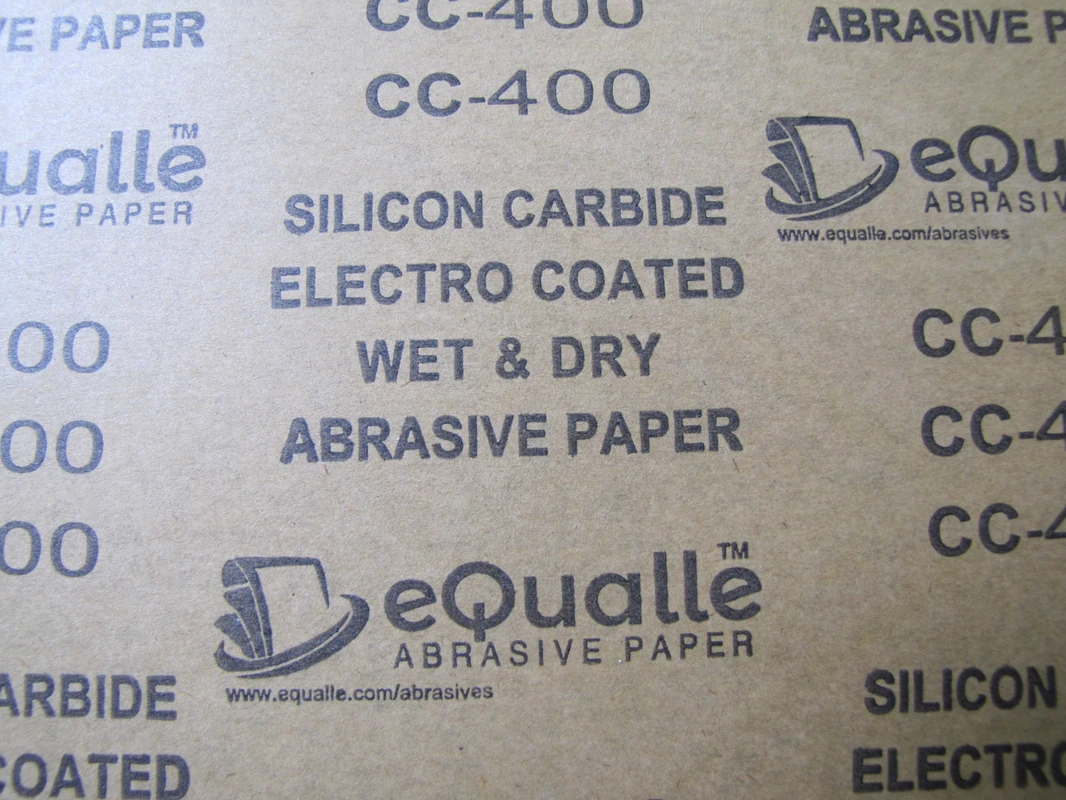
400 Grit Sandpaper Sheets (25-pack) — 9x11 in Silicon Carbide Abrasive for Wet or Dry Use — Fine-cut abrasive delivering consistent, silky-smooth surfaces—used for pre-polish finishing and intermediate layers. (Professional Grade).
Frequently Asked Questions (FAQ)
Q: Do I need to sand between every coat?
A: For most paints and clear finishes, a light scuff between coats improves adhesion and removes small defects. If a coat is flawless and the label says “recoat without sanding” within a window, you can skip—but expect a smoother final result if you do a gentle scuff.
Q: What grit should I use between coats?
A: P320–P400 is the safe, general range for intercoat sanding. Move to P600–P800 before your last topcoat on high-gloss work. For spot-nib removal, P600–P800 avoids cutting too aggressively.
Q: How long should I wait before hand sanding?
A: Waterborne finishes often scuff-sand in 1–2 hours; oil-based products can need 8–24 hours. Test with a light pass—if the finish powders, you’re good; if it gums, wait longer.
Q: Is wet sanding better than dry between coats?
A: Only if the finish and manufacturer allow it. Wet sanding with water (waterborne) or mineral spirits (some oil finishes) can reduce clogging and refine scratches, but dry sanding with stearated paper and good dust control is reliable and safer on most coatings.
Q: How do I avoid sanding through edges and profiles?
A: Use a soft pad, reduce pressure, and work with higher grits (P600+). If edges are already smooth and clean, consider skipping them during intercoat sanding to preserve film build.