
Drywall sanding without ridges or gouges
You notice it at 5 p.m., when the sun drops and rakes across the wall you’ve been living beside for weeks. What looked flawless in diffuse daylight now shows a faint railroad of lines and a couple of shallow scallops near the corner. They’re not catastrophic, but they are unavoidable to the eye, and you can already hear them whispering through every coat of paint. This is the moment where drywall sanding either redeems the project or writes imperfections into it. For a lot of pros, avoiding ridges and gouges isn’t about working harder; it’s about a disciplined sequence of surface preparation, controlled abrasive performance, and lighting-aware inspection that keeps the work inside a narrow tolerance band.
If you’ve ever chased a ridge across a joint until you dug a trough, you’ve seen how quickly sanding can move from refinement to damage. The problem typically starts long before the first pass: a missed knife line, a loaded screen, too hard a backing pad, or a hurried jump in grit. Done right, drywall sanding is a minimal process—meant to erase tool marks and harmonize planes—not a corrective one. What follows is a practical, technical approach that favors cutting power where needed, forgiveness at the edge, and repeatable checks under realistic light so you don’t discover surprises after primer. By tuning your abrasive system, pressure, angles, and sequence, you’ll eliminate the small defects that become big regrets once the room is furnished and the lamps are switched on.
Quick Summary: Prevent ridges and gouges by scraping high lines before sanding, using the right grit and backing pad with light pressure, moving in controlled crosshatch passes under raking light, and inspecting after primer with targeted touch-ups.
Read the surface like a finisher
Great sanding starts with a traceable map of what needs to be removed—and what must be left alone. Before touching abrasives, interrogate the board with light, touch, and a marking strategy.
- Lighting: Use a bright, raking light (a handheld LED at a shallow angle) to throw shadows across the surface. Face each wall from at least two directions. Note that the angle revealing defects is usually steeper than normal room lighting; you’re intentionally exaggerating flaws at this stage.
- Touch: Glide your palm flat over seams and butt joints. Your skin will “read” a 0.2–0.5 mm ridge long before your eye does.
- Marking: Lightly pencil-circle defects (don’t scribble over an entire zone). Number them by priority: 1 for knife lines and nibs that must be removed; 2 for shallow waves that may need a quick skim after spot-sanding; 3 for areas that might be acceptable after primer.
Common sources of ridges and gouges originate upstream. Knife ridges left in setting compound are hard and will cut grooves into softer areas when your abrasive skates over them. A loaded screen behaves like a trowel edge, smearing dust and imprinting faint lines. A too-firm backing pad transfers all your wrist’s micro-angles into the wall, producing arcs and scallops. And heavy pressure, especially near edges or on butt joints, flexes the paper and digs instantly.
Actionable steps for this stage:
- Pre-scrape first: With a 6–10 inch knife or a carbide scraper, slice off any proud ridges and hardened boogers. Don’t try to sand them out; remove the obstacle so your abrasive can stay flat.
- Control your field: Tape off trim, mask corners, and remove hardware so your tool doesn’t catch an edge.
- Pencil guide: On long seams, run a faint, intermittent pencil line along the crown. It should just disappear with your first passes; if the line remains in valleys, you’re sanding the wrong area or need a light skim instead.
This diagnostic approach ensures you’re sanding to a plan, not reacting to surprises, and it sets the floor for the minimal, low-pressure cutting that prevents gouges.
Dialing in your drywall sanding workflow
Most ridges and gouges happen because the sequence is off or the abrasive system is mismatched to the surface. The goal is to start fine enough to avoid plowing scratches, but not so fine that you burnish ridges instead of flattening them.
Recommended baseline progression:
- Local defects and joint edges: Start at P120 open-coat or equivalent mesh. Step to P150 for blending, and finish at P180 on Level 4 work. Only go finer if you’re preparing for gloss finishes or Level 5 skim.
- Broad skims or full-wall touch: Use P150-P180 with a soft interface to avoid tracks; higher grits on broad areas reduce the risk of grooves telegraphing through primer.
Tooling choices:
- Hand block or sanding sponge for inside corners and delicate feathering; choose a medium-density sponge with radiused edges.
- Pole sander with a universal pivot for seams and ceilings; keep the head flat and your hands chest-level to minimize edge lift.
- Vacuum-assisted random orbital (ROS) with a 3–5 mm foam interface pad for wider flats. The foam isolates micro-angles and prevents a hard pad edge from printing crescents.
Stroke discipline prevents digging. Use a light, two-handed grip with elbows loose. Work in overlapping crosshatch passes—about 10–15 degrees off the seam—so you’re not running parallel tracks that can become grooves.
Pressure: Let the abrasive cut. If you see dust darkening or the paper polishing, you’re pushing too hard or the grit is spent.
Edge control: Keep the tool centered over the crown when feathering a seam. Don’t chase low valleys—skim them instead.
Change rate: Swap paper at the first sign of loading or a decrease in cut. A loaded abrasive skids and gouges. On joint compound, that’s often every 40–70 square feet with P150, depending on dust extraction.
According to a article.
Three workflow tips to stop defects before they start:
- Precut relief with a blade: If a stubborn knife line remains, score it once with a sharp utility blade at a shallow angle, then sand. The blade removes the ridge so the abrasive can flatten, not dig.
- Skim, don’t sand, the lows: The fastest way to create a gouge is to “fix” a depression with more sanding. Add a tight skim and return with P150 after cure.
- Stage your cleanup: Vacuum and wipe between grits. Dust crumbs under the pad act like random rocks that score tracks.
Abrasives, grits, and backing systems
Abrasive selection is not brand theater; it defines cut rate, scratch pattern, and loading—three variables that decide whether you leave crisp flats or unhelpful grooves.
Grain types:
- Aluminum oxide: The baseline for drywall—tough, friable enough to refresh edges, good cost/performance. Ideal in P120–P180 for joint compound.
- Silicon carbide: Sharper initial cut, more brittle. Excellent on hard setting compounds for initial passes; can track if over-pressured.
- Ceramic/ceramic blend: Aggressive and durable; generally overkill for drywall and more prone to cutting trenches if paired with a hard pad.
Coatings and structure:
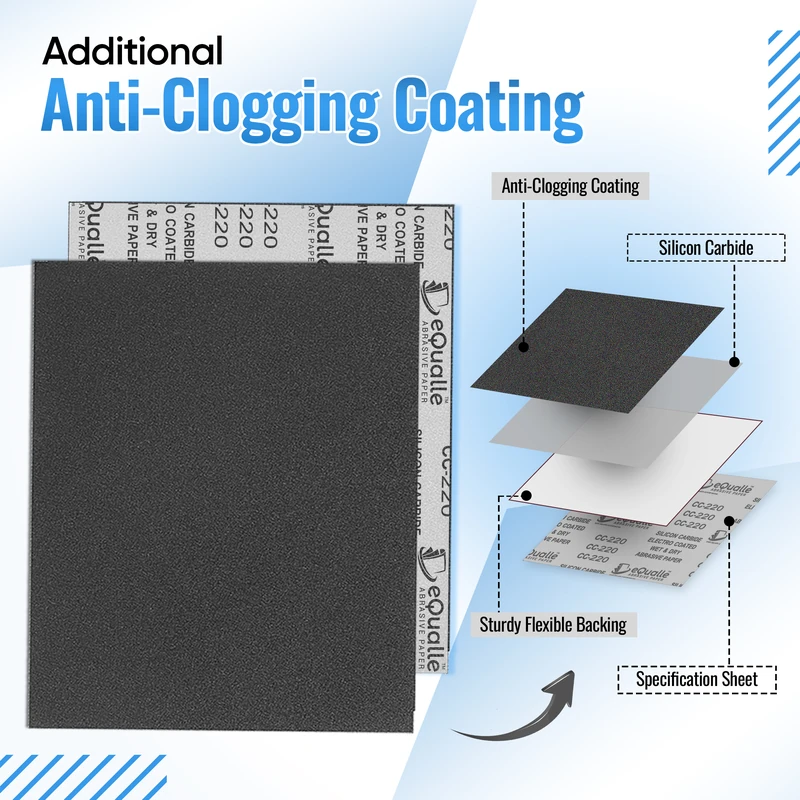
- Open-coat papers shed dust more easily and resist loading, crucial for gypsum. A stearate coating adds anti-clogging properties but can reduce initial bite; excellent for finish passes.
- Mesh screens offer superior dust extraction and longevity. However, their weave can behave like a file if you lift an edge or roll into a corner; always pair with a compliant pad and light pressure on flats.
Backing matters as much as grit:
- Hard pads telegraph every small tilt. Use them sparingly on drywall—maybe for knocking back a setting-compound ridge after pre-scrape.
- Soft interface pads (3–5 mm foam) distribute pressure, shielding edges and preventing scallops. On ROS tools, this is the single best insurance against gouges and crescent marks.
- Hand blocks with slightly radiused edges prevent edge-cut lines on seams; square blocks tend to print their corners.
Dust extraction isn’t just cleanliness; it’s cut control. A vac-rated ROS with proper hole alignment or a mesh disc on a ventilated pad keeps abrasives from clogging and losing bite. When dust cakes, you push harder, and that’s when grooves start.
Four abrasive-system tips:
- Start finer than you think on finish work: P120 is the lowest grit most drywall ever needs; reserve P100 for hard ridges after scraping.
- Calibrate one wall: Run a test patch with P120 → P150 → P180 and inspect under raking light and primer. Lock the sequence in for the rest of the room.
- Clean on the fly: Knock mesh screens clean with a nylon brush or blast with vacuum backflow. Don’t wait for visible clogging.
- Retire early: If the abrasive’s scratch pattern turns glossy or squeals, replace it. Dull grains skate and plow.
Preventing defects under real-world lighting
Walls don’t live under shop lights. They live under lamps, windows, and downlights that produce tough angles. Preventing ridges and gouges means validating your work in the conditions that will expose it.
Lighting strategy:
- Pre-sanding: Use harsh raking light (handheld LED, 2000+ lumens) to locate and rank defects.
- In-progress: Soften the light slightly so you can see the scratch pattern without overreacting to every micropore. Consistency of angle matters more than intensity.
- Pre-primer check: Swap to the room’s actual lighting—turn on recessed cans, open blinds. Look for linear grooves that align with your sanding path and for scallops near butt joints.
Primer is a truth serum. A PVA primer-surfacer will fill micro-scratches but make planes and waves more visible. Don’t skip a primer inspection pass.
- After the first primer coat, re-map the walls under the same lights. Circle defects lightly.
- For faint grooves, apply a micro-skim (thinned topping compound) with a 10–12 inch knife, feathering 8–12 inches past the defect. Let cure fully; sand with P180 on a soft interface, crosshatching lightly.
Environmental control:
- Temperature/humidity: Joint compound sands differently at 50% RH than at 70% RH. High humidity softens the surface, increasing loading and smear. Ventilate and use dehumidification to keep conditions stable.
- Cure time: Setting compounds can feel sandable but remain green inside. If your paper “grabs” or pills the surface, it’s too early; wait, or you’ll fuzz the paper and dig.
Edge cases and prevention:
- Paper fuzz: If you oversand into face paper, stop. Seal with a drywall sealer or shellac-based primer, let dry, then skim. Sanding fuzzy paper just creates more fuzz and gouge risk.
- Recessed lighting zones: Shine a raking light from the fixture location to simulate future glare paths. Protect these “hot paths” with extra caution—softer backing and lighter pressure.
Three final-inspection tips:
- Change direction: If you sanded seams diagonally, inspect from the opposite diagonal to expose any directional grooves.
- Feel after primer: Your hand becomes more reliable once the absorbency is equalized; small ridges pop under the palm.
- Mark and micro-fix: Use ultralight touch-ups, not aggressive resanding. The best fix for a groove is a 2-minute skim, not a 10-minute dig.
When do the — Video Guide
A concise pro walkthrough underscores a counterintuitive truth: most novices over-sand drywall and create defects they then have to repair. The video explains when professionals actually choose to sand versus when they scrape, skim, or simply leave a surface alone because the next step (primer or a thin skim) will deliver a better outcome.
Video source: When do the PROS sand drywall? You're Probably OVER SANDING
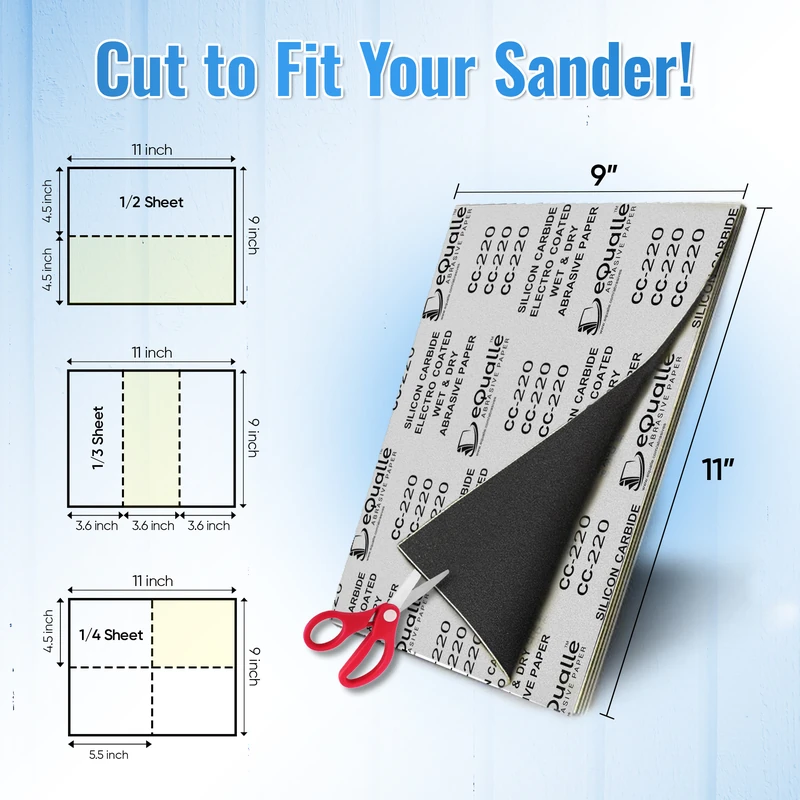
100 Grit Sandpaper Sheets (10-pack) — 9x11 in Silicon Carbide Abrasive for Wet or Dry Use — General-purpose coarse sandpaper for smoothing rough surfaces and removing old coatings. Works well on wood, metal, and resin projects. Designed for wet or dry sanding between aggressive 80 grit and finer 150 grit stages. (Professional Grade).
Frequently Asked Questions (FAQ)
Q: What grit should I start and finish with to avoid grooves?
A: For Level 4 work, start around P120 on joint edges and local defects, move to P150 for blending, and finish at P180 on broad areas. Only drop to P100 for knocking back hardened ridges after you’ve scraped them first, and only go finer than P180 when preparing for gloss finishes or a Level 5 skim.
Q: Why do I get long, linear scratches after priming?
A: Those are usually from a loaded abrasive or a hard pad edge tracking the same path. Improve dust extraction, switch to open-coat paper or mesh, add a 3–5 mm foam interface, reduce pressure, and crosshatch your passes. After primer, erase the lines with a thin skim and a light P180 finish.
Q: Are mesh sanding screens better than paper for drywall?
A: Mesh screens excel at dust evacuation and longevity, making them great for broad, light passes. But their open weave can cut tracks if you lift an edge or push too hard, especially near corners and butt joints. Pair mesh with a compliant backing pad, keep the head flat, and use lighter pressure to avoid grooves.
Q: How do I fix a gouge without re-sanding the whole wall?
A: Stop sanding. Vacuum the area, seal any exposed paper with a quick-dry sealer if needed, then apply a tight skim of topping compound slightly wider than the defect. After full cure, sand with P180 on a soft interface using light, crosshatched strokes, and reinspect under raking light before touch-up priming.
Q: Should I sand between skim coats or only at the end?
A: Spot-sand or scrape between coats only to knock down ridges and nibs; avoid broad sanding until the final coat. Heavy intermediate sanding adds risk of gouges and tears. A quick scrape with a wide knife between coats keeps the finish flat and protects the paper.