
Floor sanding without waves: an engineer’s guide
The first time you notice it is usually at dusk. A low-angle beam of light slides across a once-proud living room floor and breaks into a washboard pattern—soft ripples that weren’t there in the morning. You kneel and run your fingers over what looks like a gentle sea: highs and lows, ridges and hollows between boards. It’s disheartening because the room is otherwise perfect: fresh paint, crisp trim lines, and the faint scent of a new finish. But the floor gives it away. Somewhere in the process of floor sanding, the surface lost its flatness. In softwood rooms, the earlywood lines feel scooped out. In oak and maple, it’s more of a periodic wave that telegraphs through every coat of finish.
As a product engineer obsessed with how abrasives cut and how machines transmit force, I take these defects personally. Floors aren’t failing for mysterious reasons; they’re following physics. Uneven pressure, mismatched grits, minerals that collapse the soft springwood, and resonance from drums or disc heads leave topography behind. Fortunately, the same physics that creates dish-out and waves also gives us levers to control them—mineral choice, grit sequence, interface hardness, feed rate, pressure mapping, and verification under raking light. With disciplined process control, even tricky species and patchwork subfloors can end up dead flat.
Quick Summary: Waves and dish-out happen when cutting force, grit sequence, and machine dynamics aren’t matched to wood density and layout; dial in pressure, mineral, and movement to keep floors flat.
Why dish-out and waves happen
Let’s define terms. Dish-out is local depression where softer earlywood or weak areas between boards are removed faster than the adjacent latewood or hard growth rings. It shows up as troughs aligned with grain, and it’s most common in softwoods and ring-porous species with strong density contrast. Wavy floors are broader periodic undulations running across the field, often with a repeating pitch that corresponds to machine vibration, belt splice frequency, or operator dwell.
Material science first. Wood is anisotropic: hardness and stiffness change with grain direction and growth ring orientation. Springwood (earlywood) in pine can be less than half the density of latewood; even in oak, earlywood pores weaken the matrix. That difference means a given abrasive, under a given pressure, removes more depth in soft bands. The more compliant your sanding interface (soft foam pads, worn platens, cushioned edger wheels), the more it “falls into” soft zones and scoops them out.
Abrasive mineral and coat matter. Closed-coat ceramic-alumina with a tough resin bond cuts aggressively and stays sharp; on a soft floor, that aggressiveness can amplify differential cutting unless you control pressure and sequence. Open-coat aluminum oxide sheds dust better and can be more forgiving in the final passes. Silicon carbide fractures easily into finer edges and tends to polish; used correctly at high grits, it helps refine scratches without deepening troughs.
Dynamics complete the picture. Every big machine, edger, and multi-disc head has characteristic vibrations. When your feed rate synchronizes with a vibration (from drum imbalance, belt splice, or wheel runout), you get a repeating wave. The wave spacing is roughly the travel speed divided by the dominant vibration frequency. For example, feeding at 1.5 inches/second with a 12 Hz low-frequency oscillation can leave ~0.125-inch pitched “washboard.” Edgers with soft pads tilted too aggressively carve scallops at the perimeter; multi-disc sanders with soft interface plates can “float,” digging more in springwood arcs. Add to this uneven subfloor support or cupped boards and you have a recipe for topography that finish will highlight, not hide.
The takeaway: dish-out is about differential hardness plus compliance; waves are about resonance and dwell. Solve both by stiffening the interface, managing pressure, picking the right mineral and grit steps, and keeping machine movement smooth and unsynchronized with any vibration source.
Grit sequencing for reliable floor sanding
A disciplined grit sequence is your cheapest insurance against topography. Don’t jump grits to “save time”—you’ll spend it later trying to chase out unevenness.
Baseline sequences:
- Heavily cupped or finish-laden floors: 24/36 → 50/60 → 80 → 100 (optional 120 with hard plate or screen).
- Moderately worn flat floors: 36/40 → 60 → 80 → 100 (optional screen at 120).
- Close-grained hardwoods (maple, beech): 40 → 60 → 80 → 100/120, no jumps larger than one grit class.
Mineral choice by task:
- Flattening cuts: ceramic-alumina or zirconia-alumina belts (closed coat) resist dulling and maintain a consistent scratch, which flattens faster at lower pressure.
- Intermediate cuts: aluminum oxide closed or semi-open coat to reduce deep scratch valleys that can telegraph as “grainy” gloss bands.
- Final refinement: silicon carbide or fine aluminum oxide screens (100–120) to blend micro-scratches without collapsing springwood.
Interface stiffness:
- Use a hard plate or firm platen for the last leveling pass; avoid foam-heavy interfaces at the end. Soft interfaces conform to lows and exaggerate dish-out.
- On multi-disc sanders, switch to a firm or hard driver with thin pads for final passes, limiting time on soft pads to scratch blending only.
Feed and overlap:
- Maintain a 30–50% overlap between paths at each grit and vacuum thoroughly before moving up. Leftover coarse grit particles are rogue cutters that create deep, isolated scratches forcing more dwell in higher grits—another route to dish-out.
Actionable tips:
- Always pencil-line the floor before each grit. Sand until all pencil is uniformly gone; uneven leftover lines reveal low spots early, before you “polish in” defects.
- On softwoods, stop your sequence one grit earlier on the multi-disc (e.g., 80) and finish with a firm hard-plate 100. That prevents the multi-disc from hovering and carving springwood.
- Record your starting grit based on a 12–18-inch straightedge survey. If you measure more than 1/16-inch deviation across boards, start no finer than 36.
Machine setup and pressure control
Machines leave the imprint of their setup. Spend 15 minutes calibrating before you touch the floor; you’ll save hours later.
Big machine (drum/belt):
- Drum alignment and contact: With the machine unplugged, lower the drum onto a sheet of carbon paper over a clean scrap board. The contact patch should be uniform across the width. If one side prints darker or wider, adjust drum tilt or wheel height until even.
- Belt tracking and splice: Run a fresh belt and watch the splice. If you feel rhythmic thumps, replace the belt or re-tension; splices that slap will seed waves at a fixed pitch.
- Pressure consistency: Know your machine mass. A 150–180 lb machine with the drum down typically delivers 2–5 psi over the contact patch. Add only as much downforce as needed to cut; more is not better—it increases differential cutting in soft zones.
- Wheels: Clean and true wheels. A flat spot or embedded grit will create micro-bounces that show as chatter or waves. If you can hear it, your finish will show it.
Edger:
- Keep the pad firm and the tilt shallow. Excess tilt concentrates load at the rim, scalloping the perimeter. Use a hard or medium-hard pad for the final edge pass, especially on softwoods.
- Move in smooth arcs with consistent overlap; don’t “park” the edger—dwell equals dish-out.
Multi-disc/planetary:
- Level the head so all discs touch evenly. Use feeler gauges under each disc on a glass plate to confirm parallelism.
- Choose pad durometer to match the task: softer to blend scratches after flats are established; firm/hard to maintain plane in final passes.
Verification during setup:
- Use raking light from a flashlight at a 10–20° angle after your first flattening pass. If you see periodic bands, vary feed speed slightly on the next pass to de-synchronize from any vibration source.
According to a article
Actionable tips:
- Measure your travel speed: place tape marks 24 inches apart and time your passes. Target 1–2 inches/second for coarse grits, slowing slightly with finer grits while keeping the machine moving before lowering the drum.
- Map pressure with a bathroom scale under a scrap board: gently set the running machine’s drum on it to estimate downforce changes as you adjust springs or handles.
Technique that keeps floors flat
Even perfectly set machines can cut unevenly with erratic movement. Technique ties the process together.
- Pass angle and sequence:
- First cut 7–15° to the grain to flatten cupping and bridge board edges; second cut parallel to the grain to remove cross-scratches; third cut parallel again one grit finer to refine. Larger angles flatten faster but risk cross-grain scratches that are harder to erase.
- Starting and stopping:
- Always start with the machine moving before lowering the drum, and lift before stopping. Lowering or raising the drum while stationary presses a divot that becomes the seed of a wave.
- Overlap and lanes:
- Work in lanes with 1/3 to 1/2 overlap. Log your path sequence on a sketch. Intentional, consistent overlap prevents overworked edges and underworked centers.
- Dust control between grits:
- Vacuum thoroughly and wipe down the floor between grits. A single 36-grit particle lodged under a 100-grit belt is a trenching tool that makes you dwell—causing dish-out.
- Perimeter blending:
- After edging, hard-plate the field one grit finer than the edge to minimize the “halo.” A hard plate maintains flatness at the interface; a soft screen can telegraph edge scallops into the field.
- Species-specific adjustments:
- For softwoods (pine, fir): reduce applied pressure and shorten dwell across earlywood. Consider stopping the multi-disc at 80 and finishing with a firm hard-plate at 100.
- For dense maples: avoid overheating and glazing abrasives. Keep a moderate feed and refresh belts early; glazed belts burnish latewood, making earlywood seem to “sink” by comparison.
Actionable tips:
- Use pencil witness marks not just across the field but also along suspect earlywood bands; stop the pass the moment they disappear to avoid excess in soft zones.
- Rotate operators for large rooms. Fatigue changes feed speed and overlap patterns; fresh eyes catch early waves under raking light.
Verification and troubleshooting
You can’t fix what you don’t measure. Verification transforms “looks flat” into “is flat.”
- Raking light and gloss preview:
- After each grit, sweep the floor with a bright LED at a shallow angle. Mark any bands or troughs with tape or pencil. This simulates how finish amplifies topography.
- Straightedge and feeler gauges:
- Use a 24–36-inch straightedge across boards and along them. Slip 0.010–0.020-inch feeler gauges under to quantify lows. If you measure growing lows after finer grits, your interface is too soft or you’re dwelling.
- Black marker scratch test:
- Draw three heavy lines in a triangle pattern. Sand at the target pass speed. If center lines fade first, you’re convex (too much pressure in the center). If edges fade first, your drum is crowned; adjust tilt or wheels.
- Chalk grid for multi-disc:
- Crosshatch chalk over a 4×4-foot test area. Run a short test pass. Even removal equals level head and uniform disc contact; patchy removal means some discs are riding light.
- Moisture and stability:
- Check MC with a pin meter before and during sanding. High or uneven moisture creates rebound and post-sanding movement that reads like waves after finish. Sanding a cupped, wet floor flat is temporary—let it stabilize first.
Troubleshooting map:
- Repeating waves at constant spacing:
- Change feed speed slightly and inspect belt splice; check drum balance and wheel trueness.
- Dish-out aligned with grain:
- Switch to a firmer interface for final grits; reduce pressure and limit time on multi-disc; consider stepping back a grit to re-level with a hard plate.
- Edge scallops telegraphing:
- Re-edge with a firmer pad and shallower angle; then hard-plate the field with one grit finer to blend the transition.
Actionable tips:
- Keep a simple log: room, species, moisture, starting grit, sequence, machine settings, and any defects seen under raking light. The best floors come from repeatable settings.
Sanding Against The — Video Guide
A widely viewed shop test pushes sanding in a deliberately wrong direction—aggressive passes across the grain to show what happens when technique ignores wood anatomy. The host demonstrates how rapid, off-grain movement and mismatched grit choices create tearout, patterning, and exaggerated topography that finish will only magnify.
Video source: Sanding Against The Grain, LIKE A MANIAC
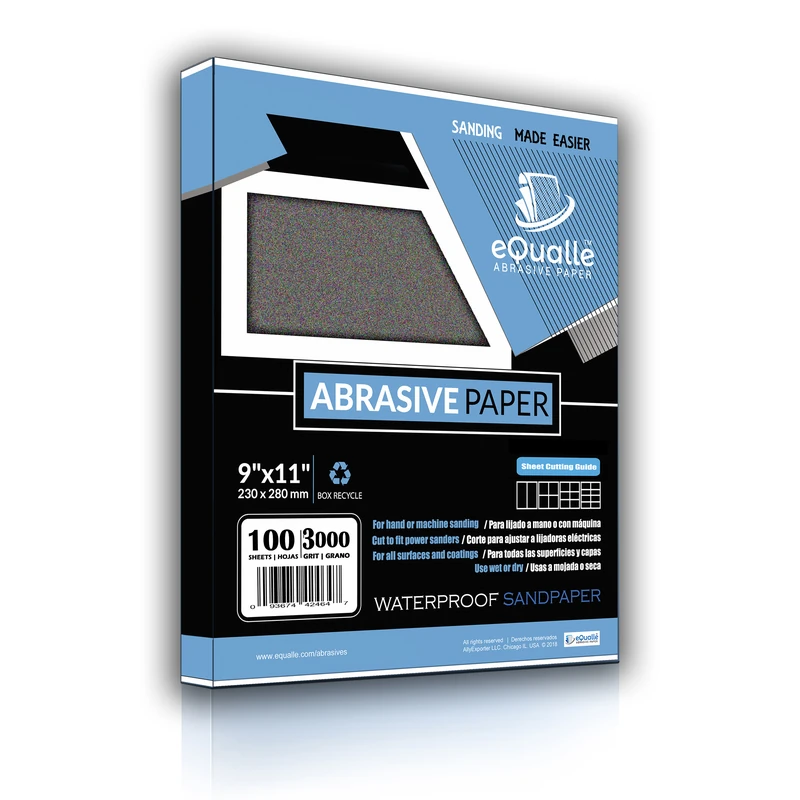
80 Grit Sandpaper Sheets (50-pack) — 9x11 in Silicon Carbide Abrasive for Wet or Dry Use — Durable coarse abrasive that evens out irregular surfaces and clears old coatings. Ideal for early sanding stages in woodworking, fiberglass, or metal preparation. (Professional Grade).
Frequently Asked Questions (FAQ)
Q: What causes wavy floors after sanding even when the boards were flat
A: Most waves come from synchronized machine vibration and feed speed, an uneven drum or wheel issue, or dwelling at starts/stops. Verify drum alignment, true wheels, replace spliced belts that thump, and slightly vary your feed speed to break resonance.
Q: How do I avoid dish-out on softwoods like pine
A: Reduce pressure, use firm interfaces in the last passes, and avoid long dwell on multi-disc sanders. Sequence 36/40 → 60 → 80 → 100, then finish with a hard plate rather than a soft screen. Keep raking light handy and stop the moment pencil lines vanish over earlywood.
Q: Is skipping from 36 to 80 grit a good time-saver
A: No. Skipping grits leaves deep valleys that require longer, finer passes to remove—often causing dish-out and waves. Don’t jump more than one grit class. A 36 → 60 → 80 → 100 progression is faster to a flat, uniform surface.
Q: Should I end with a screen or a hard plate before coating
A: For flatness, a hard plate with 100–120 grit maintains the plane better than a soft screen. You can use a light screen afterwards for scratch blending, but do not let a soft interface become the last tool to shape the surface.
Q: Why does the finish make small waves look worse
A: Finishes, especially waterborne, level to an average film thickness and highlight surface topography under raking light. Gloss emphasizes it most. If the substrate has waves or dish-out, the finish will telegraph them; only sanding and leveling can truly remove them.