
Headlight Restoration: Choosing Your Starting Grit
A winter commute, rain-slick asphalt, and the kind of fog that makes oncoming halos swell across the lane. You glance at your beams on a storefront window and see the telltale yellow haze dulling the cutoff. That’s the moment a small but consequential problem turns personal: you’re overdriving your headlights. Effective headlight restoration is less about miracle coatings and more about disciplined surface engineering—cutting away degraded polymer, managing scratch depth, and sealing a clean, optically active substrate against UV. Choosing the correct starting grit is the decision that governs everything downstream: how much material you’ll remove, how long you’ll spend chasing deep scratches, and whether you’ll have the optical clarity and durability you expect six months from now. Make the wrong call and you either waste hours refining unnecessary gouges or, worse, leave oxidation entombed under a fresh topcoat.
Polycarbonate lenses wear in layers. The OEM UV hardcoat breaks down first, then the upper polymer network oxidizes and micro-pits. With heavily yellowed headlights, the damage often runs deeper than the color suggests. What you need is a repeatable way to measure severity, convert that into a starting grit, and then commit to a controlled sequence that reduces scratch depth predictably. This is shop work, not guesswork, and the tools are simple: lighting, clean abrasives, proper lubrication, and a methodical, documented grit progression.
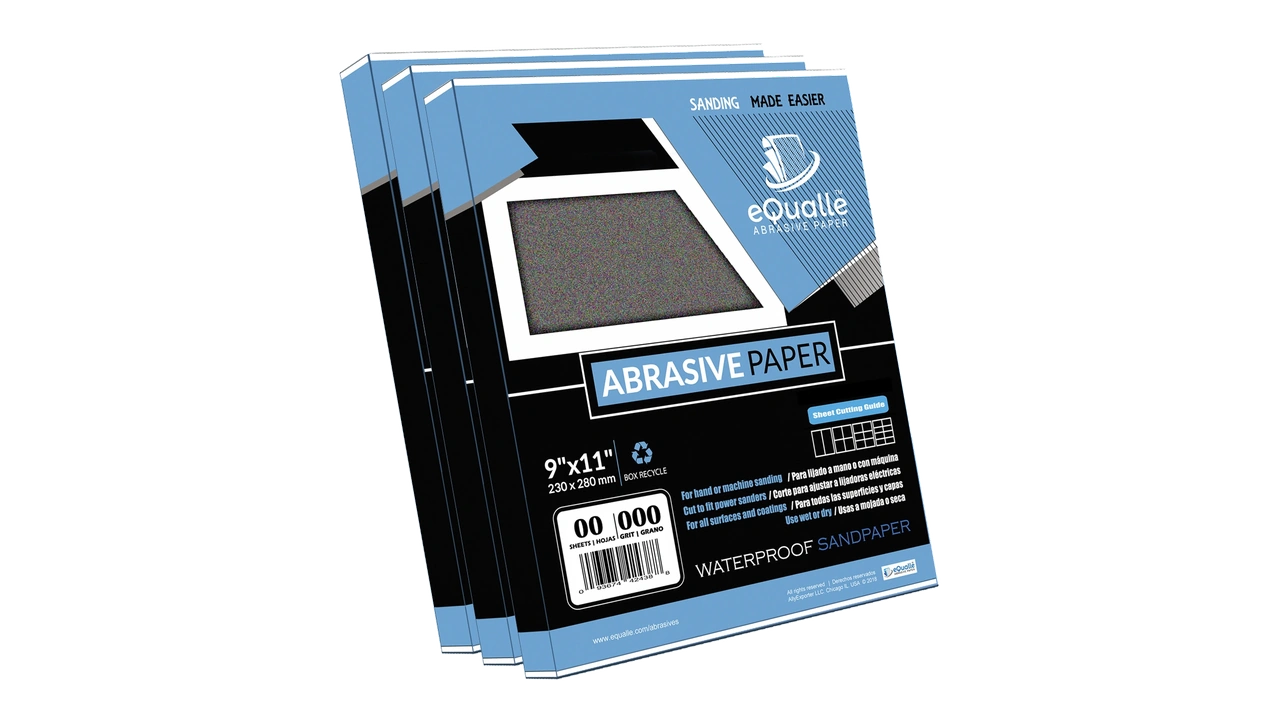
Quick Summary: Heavily yellowed lenses typically start at P600–P800 (FEPA), but if there’s coarse pitting or failed hardcoat, P400—sometimes P320—may be warranted, followed by tight grit steps, thorough refinement to at least P3000, and a UV-stable topcoat.
Assessing Lens Damage Precisely
Before you touch sandpaper, profile the lens. A precise assessment saves you from overcutting or entombing oxidation.
- Illumination and angle: Use a cool-white LED flashlight at 45–60 degrees. A uniform yellow tint with smooth texture usually indicates primarily oxidized hardcoat. A “stippled” texture or pebbling signals micro-pitting into the polycarbonate.
- Marker test: With a fine-tip solvent-resistant marker, draw a cross-hatch in a 2 × 2 cm area. Lightly abrade that square with a foam-backed P1000 disc and water. If the marks vanish in under 10–15 seconds and the matte is uniform, the damage is superficial. If remnants persist or the matte remains blotchy, damage penetrates deeper.
- Fingernail and edge check: Lightly drag a fingernail perpendicularly across the worst area. If you can feel discontinuities, you’re contending with mechanical erosion or coating failure, not just oxidation. Also inspect lens edges; edges tend to retain hardcoat longer. A dramatic difference between center and edges is a clue to non-uniform UV degradation and potential coating lift.
- Lux meter snapshot: Use a smartphone lux meter app in a dark garage, measuring reflected brightness from a consistent distance before and after a small P1000 test patch. A jump of 10–20% on a tiny cleared area means you’re removing optically significant contamination; if gains are minimal, the underlying polymer may be micro-cracked and require a coarser initial cut.
- Water break behavior: After a detergent wash, sheet water across the surface. Tight beading often indicates residual hydrophobic hardcoat; continuous sheeting suggests that layer has eroded, leaving exposed, polar oxidized polymer. Exposed polymer will abrade faster and more uniformly.
Record these observations. If you see uniform yellowing with no tactile texture, you can plan a conservative start at P800–P1000. If you detect coarse texture, pits, or coating lift, plan on P600—and keep P400 in reserve. Structural crazing (white hairline cracks within the substrate) is a replacement flag; sanding will not remove material deep within the polymer network safely.
Abrasive Selection for Headlight Restoration
Choosing the starting grit is a function of oxidation depth and surface topology, but your abrasive format matters just as much. A high-quality film-backed or micro-replicated disc will cut faster and scratch more uniformly than bargain paper that sheds grit and loads up.
- Grit systems: Most automotive abrasives use FEPA P-grit. Approximate mean particle sizes: P400 ~ 35 µm, P600 ~ 26 µm, P800 ~ 22 µm, P1000 ~ 18 µm, P1500 ~ 13 µm, P2000 ~ 10 µm, P3000 micro-replicated behaves like a 6–8 µm scratch depth producer. Don’t mix CAMI and FEPA mid-sequence without understanding the jump.
- Foam-backed vs film: Foam-backed discs (e.g., 3M Trizact) maintain contact on curved lenses and dampen peak scratch depth, lowering the risk of random deep scratches that take forever to chase. Film-backed P400–P800 provides flatter, more controlled initial leveling on hardcoat remnants.
- Tooling: A dual-action (DA) sander at 3–4 mm orbit with a 3-inch pad and soft interface gives consistent pressure. Hand sanding with a firm, flexible block works but is slower and less uniform.
Starting grit logic for heavily yellowed lenses:
- Uniform yellowing, minimal texture, intact hardcoat: Start P800. Goal: clear the oxidized layer without introducing deep scratches.
- Moderate yellowing with light pebbling or visible hardcoat failure: Start P600. Goal: level the failed coating and open the surface quickly.
- Severe yellowing, coarse pitting you can feel, or aftermarket coating failure: Start P400. Goal: remove craters and ridges efficiently, then step to P600–P800 promptly.
- Substrate crazing or gouges >0.2 mm: Consider P320 spot-leveling with extreme caution; often replacement is more economical.
For efficiency, keep progression steps tight—no more than 1.6–2× between grits. Example heavy-oxidation sequence: P600 → P800 → P1000 → P1500 → P2000 → P3000 (or P5000) → polish. Skipping from P600 to P1500 is technically possible with micro-replicated abrasives, but you’ll spend longer compensating for uneven scratch populations.
According to a article, seasoned technicians routinely drop to P400 on hardcoat failures, emphasizing that uniformity and full oxidation removal matter more than clinging to higher grits. The key is recognizing when you’re cutting polymer rather than just scuffing contamination—and then fully refining that coarse cut.
Wet Sanding Technique and Scratch Control
Once you commit to a starting grit, process discipline keeps you from building defects you’ll regret later.
- Lubrication: Use clean water with a drop of pH-neutral car shampoo or a dedicated sanding lubricant to break surface tension and carry swarf. Replenish every 10–20 seconds; a milky slurry means you’re cutting effectively.
- Pressure and passes: With a DA, apply light to moderate pressure—enough to keep the pad planted without stalling. By hand, keep the block flat and use crosshatch strokes (0°/90°) at a consistent cadence. Aim for 10–15 overlapping passes per axis before inspecting. Over-aggression won’t speed removal; it just deepens random scratches.
- Matte uniformity check: Your cue to move up a grit is not time—it’s the disappearance of the prior defect class. After your first cut, the lens should display a completely uniform matte with no glossy pores (residual pits) or darker “worm tracks” (unleveled oxidation). Under a point light, the surface should scatter evenly without bright micro-hotspots.
- Edge management: Tape paint and rubber gaskets with high-tack automotive masking tape. Feather pressure within 5–8 mm of edges to avoid thinning, and remove tape for the last fine grit so you don’t leave a hard sanding line that telegraphs through your topcoat.
- Disc health: Rinse discs frequently; a loaded P600 scratches inconsistently, generating a mixed scratch population that takes extra stages to eliminate. Retire any disc that develops a shiny glazed face.
Actionable tips for consistent results:
- Preheat the lens slightly with a heat gun on low (or sunlight) to 25–30°C; warm polycarbonate cuts more predictably and clears water faster.
- Use a soft interface pad from P1500 upward to conform to curvature; omit it for P400–P600 to maximize leveling accuracy.
- Write your sequence on painter’s tape stuck to the fender; check off each grit and note times—this avoids accidental grit skips.
- Squeegee between passes with a rubber blade; water hides defects. A quick dry reveal shows whether you’ve fully leveled.
- Shine a 500–1000 lumen flashlight obliquely after each stage; micro-hotspots mean you haven’t killed the previous scratch set.
Your refinement target before polishing is a uniform P3000 (or P5000) finish. If you can’t achieve a haze-free result at P3000 under a point light, don’t expect a compound to rescue inconsistent scratches efficiently. Regress one grit, re-level, and only proceed once uniform.
Refinement: Polish, UV Sealant, and Longevity
Sanding reveals optical clarity, but polishing and sealing lock it in. A good polish will remove the final micro-scratches; a proper UV topcoat prevents rapid re-oxidation.
- Polishing: After P3000–P5000, use a DA with a 3-inch soft foam cutting pad and a plastic-safe compound. Work small sections (1/4 lens), speed ~4000–5000 OPM, 2–3 slow passes with light pressure. Wipe with a clean, edgeless microfiber. Inspect under mixed lighting (LED point and diffuse). If faint haze remains, add one more pass or swap to a fresh pad; loaded pads burnish rather than cut.
- Cleaning prior to coating: Wipe with 10–20% IPA in distilled water. Avoid straight solvent or ammonia cleaners that can stress-crack polycarbonate. Zero oils is the goal; oils under a UV coating cause fisheyes and adhesion failure.
- Coating selection: Options include wipe-on urethane/UV protectants, 1K/2K clearcoats, or a dedicated headlight sealant. Wipe-on urethanes are fast and field-friendly but thin; 2K clear offers thicker, more durable film but demands masking, ventilation, and cure control.
- Application metrics: Aim for 15–25 µm wet film thickness for wipe-on urethane, 30–40 µm for 2K clear. Two light coats beat one heavy coat—flash times of 5–10 minutes between coats (or per product guide). Maintain 20–25°C and moderate humidity. Dust control is non-negotiable; even fine nibs will refract light and dull clarity.
- Cure and protection: Let coatings cure per spec (often 24 hours dust-free, 7 days full). Avoid washes or dew exposure during initial cure. For cars stored outside, consider an additional sacrificial layer like a high-UV ceramic spray after full cure to extend intervals between re-coats.
Durability is earned in the prep: if any yellowed polymer remains, it will outgas under sun load and undermine adhesion. Conversely, a fully re-leveled and polished surface, solvent-cleaned and sealed, will hold gloss and transparency for years—not months. Don’t treat the coating as a bandage; it’s a UV filter and oxygen barrier protecting the geometry you engineered with abrasives.
This is the — Video Guide
The referenced tutorial demonstrates a pragmatic, permanent-style workflow: thorough wet sanding through staged grits, machine polishing to optical clarity, and a final UV-stable coating to preserve the result. It emphasizes that the topcoat is not optional—without it, even a perfect polish will haze again as the polymer re-oxidizes.
Video source: This is the Real Way to Restore Headlights Permanently
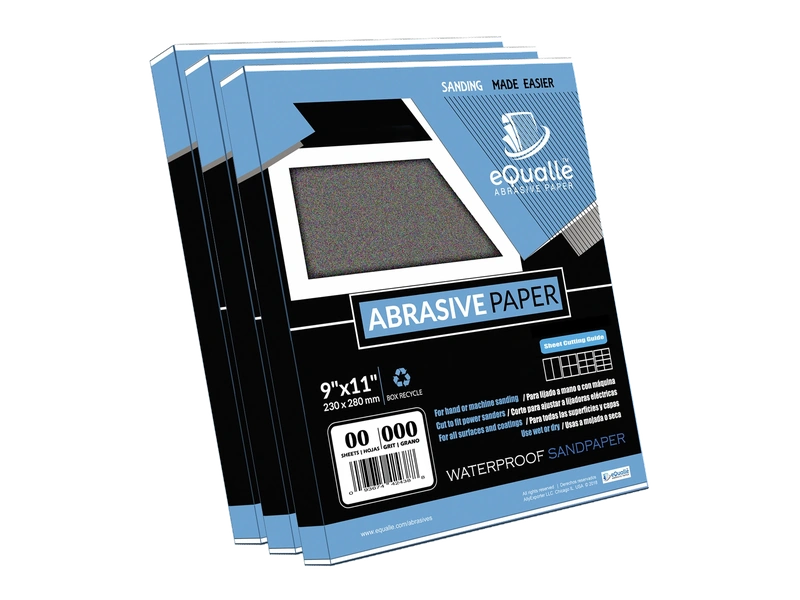
2000 Grit Sandpaper Sheets (10-pack) — 9x11 in Silicon Carbide Abrasive for Wet or Dry Use — Super-fine grit for restoring deep gloss on automotive paint, resin, or metal. Removes micro-defects and surface haze. Ideal for precision polishing prior to waxing or compounding. (Professional Grade).
Frequently Asked Questions (FAQ)
Q: What’s the safest starting grit for heavily yellowed headlights?
A: For most heavily yellowed lenses with mild texture, start at P600. If you can feel pitting or see hardcoat flaking, drop to P400 for the first cut. Reserve P320 for isolated, severe defects and spot-leveling only. Always refine through P800, P1000, P1500, P2000, and P3000 before polishing.
Q: How do I know I’ve fully removed the oxidized layer before moving up?
A: The surface should exhibit a completely uniform matte with no glossy pinholes or darker patches, and under a point light it should scatter evenly without hotspots. If any yellow cast remains when the panel is squeegeed dry, keep cutting at the current grit—moving up too early entombs defects that will telegraph through.
Q: Can I dry-sand to speed up the early stages?
A: Avoid dry-sanding polycarbonate. Wet-sanding controls heat, reduces dust loading, and yields a tighter, more uniform scratch population that refines faster. If you must dry-level a failed hardcoat edge, do so carefully with film-backed P400 on a DA at low speed, then transition to wet-sanding immediately.
Q: Do micro-replicated discs (e.g., Trizact) change the grit sequence?
A: They don’t change the need for a proper starting grit, but they can let you take slightly larger steps because they produce more uniform scratches. A common sequence after a P600/P800 film cut is Trizact 1500 → 3000 (and optionally 5000), then polish. The key remains: do not advance until the previous scratch set is fully eliminated.
Q: What if I polish after P1000 and it looks clear—can I skip finer sanding?
A: It may look clear under shop lights, but P1000 scratches are deep and will diffuse light at night and re-emerge as haze after thermal cycling. You’ll also spend far longer polishing, generating heat that risks micro-cracking. Refining to at least P3000 before polish is both faster and optically superior.