
Sanding sponge mastery for edges and corners
A calm house, early light angling through a hallway, and a quiet vow: today the trim lines and inside corners will read perfectly under any paint sheen. If you’ve ever watched a freshly rolled coat betray the smallest burr on plywood edges or a faint ridge in a taped inside corner, you know how unforgiving finish work can be. The difference between “good” and “invisible” often lives in the three-millimeter zone where planes meet. That’s where a sanding sponge becomes the tool of record—not because it’s exotic, but because the material and geometry of foam-backed abrasives let you meter pressure, conform predictably, and erase defects without telegraphing flat spots or gouges.
Edge and corner work resists brute force. Straight sanding blocks tend to carve; random-orbit sanders can bruise paper or burn through veneer wraps. A controlled hand with a conformal medium is the better path. You can feel the arris disappear from a harsh break to a consistent micro-chamfer, hear the scratch tighten from gravelly to a crisp hush, and see—under raking light—the last pores fill with primer without the telltale swirl of a hard pad. In drywall, a slightly damp sponge knits paper fuzz and knocks down ridges without cutting through tape. In wood, the right grit and foam density round over just enough to avoid paint failure at the edge while preserving the sharp design intent.
This piece details a precise, repeatable method for edges and corners: how to choose the correct sponge profile, abrasive mineral, grit sequence, and moisture strategy; how to structure the passes so you shape, stabilize fibers, and finish at a controlled radius; and how to use dust control and inspection lighting to verify the surface before coating. If you care about the shadows you don’t see, this is your workflow.

Quick Summary: Use a purpose-selected sanding sponge, disciplined grit sequencing, controlled pressure, and raking light to achieve consistent, defect-free edges and corners.
Precision at edges and inside corners
Edges and inside corners fail first: paint thins on sharp arrises, paper frays in drywall angles, veneer lips telegraph under primer, and joint ridges flash under glossier topcoats. The solution is not to “sand more” but to control the contact patch and pressure gradient. Foam-backed abrasives excel here because the foam compresses progressively—light at the arris, firmer within a few millimeters—creating a tapered cut depth that mimics a micro-bevel or consistent small radius.
Start by defining the target geometry. For most painted edges on MDF, plywood, or trim, a 0.3–0.6 mm radius minimizes coating drawdown without making profiles look rolled. For clear-coated hardwoods, maintain a smaller radius and work parallel to the grain to avoid cross-scratches telegraphing through. In drywall inside corners, the objective is flat planes that meet cleanly, with the slightest relief to avoid a raised tape ridge. Never chase perfection by riding the tip of a rigid block into the angle; you’ll undercut one plane and telegraph a groove.
Technique is tactile. Use long, shallow passes that begin on the field and exit over the edge; think “unloading” pressure as you cross the arris. In corners, use the edge or chamfered face of a sponge to bridge the angle; align your strokes along the bisector of the corner so each pass kisses both planes evenly. Control pressure with your fingertips, not your palm, and let the foam, not your wrist, create the compliance. Always confirm under raking light (a bright, narrow-angle beam at 10–20 degrees). Raking light exaggerates defects, revealing paper fuzz, chatter lines, or a proud tape seam. If you see a narrow bright line at an edge after priming, it’s too sharp; a uniform, dull ribbon indicates the radius is right.
Selecting the ideal sanding sponge grit and density
All sanding sponges are not equal. Three variables govern performance at edges and corners: abrasive mineral, grit, and foam density (plus shape). For gypsum-based compounds and drywall paper, aluminum oxide open-coat in 120–220 grit is the workhorse. It fractures slowly, stays sharp, and sheds dust without clogging. For hardwoods or factory finishes, silicon carbide can cut faster and leave a finer scratch at equivalent grit, making it useful in 220–320 for pre-finish burnish or between-coat de-nibbing.
Grit selection follows the defect, not a habit. To break sharp edges on bare MDF or plywood, start with 120–150, then refine to 180–220 before priming. On primed edges, step 220–320 to tighten the scratch without re-exposing substrate. In drywall corners, avoid dropping below 120 unless you’re correcting significant ridges; 150–220 is safer and far less likely to fuzz paper. For veneer-wrapped parts, never go coarser than 180 at the arris—your margin for burn-through is thin.
Foam density changes the cut profile. Soft foam conforms aggressively, ideal for knockdown and blending but risky for keeping an edge crisp. Medium density is the generalist: enough compliance to follow slight waves without rounding profiles too far. Firm foam behaves like a decoupled hard block with a thin cushion; it’s the right choice for crisp profiles on cabinetry or door edges where you want micro-chamfer without rolling. Thickness matters too: thinner sponges transmit more feedback and reduce accidental chamfer creep; thicker blocks are comfortable for large areas but can dull your tactile sense at an arris.
Profile choice is more than convenience. Chamfered-edge sponges seat naturally into inside corners; “V-groove” sponges bridge the angle consistently; wedge sponges concentrate pressure in narrow seams; radius-profile sponges can form consistent small round-overs on trim. If you work damp on drywall, look for closed-cell or moisture-tolerant foams; open-cell blocks swell and lose structure when over-wet. Before committing to a full workflow, test on a scrap: compress the sponge 2–3 mm against a glass edge and feel how the pressure rises—this quick “modulus feel” tells you how aggressively it will engage.
Workflow: shaping to finish in tight geometry
Treat edges and corners as a micro-process within the larger surface prep. The workflow below balances material removal, fiber stabilization, and finish readiness.
Shape: Define the geometry first. On bare wood or MDF edges, use 120–150 grit on a medium or firm sanding sponge. Work 3–4 light passes that start on the field and exit over the edge to break the arris into a controlled micro-bevel or small radius. In drywall corners, begin with 150–180 grit, bridging the angle with a chamfered sponge face; focus on knocking down ridges and feathering transitions, not digging the crease.
Stabilize: Fibers that stand after initial shaping must be tightened. On wood, step to 180–220; on gypsum, stay in 180–220. If drywall paper fuzz appears, switch to a slightly damp sponge—just enough moisture to mat fibers without saturating paper. Wipe diagonally across the seam, then immediately dry-pass with a clean sponge face.
Refine: After primer or first coat, re-light with raking illumination. Use 220–320 grit to de-nib dust and unify the scratch. In inside corners, keep strokes aligned with the angle’s bisector, using only the edge band of the sponge to minimize over-rounding.
Verify: Apply a light pencil guide coat or dry-erase smudge across edges and corner lines. One or two controlled passes should remove the guide uniformly if your geometry is consistent.
According to a article
Actionable tips
- Pre-dampen wisely: For drywall, wring the sponge until no water drips, then blot once on a towel. Aim for “cool to the touch,” not wet; over-wetting lifts paper.
- Index your radius: Tape a 0.5 mm feeler to a straightedge; if light sneaks under at the arris after two passes, you’re rolling too far. Back off to a firmer sponge or lighter pressure.
- Rotate faces: Flip or quarter-turn the sponge every 6–8 linear feet to maintain a crisp, predictable scratch and avoid embedded dust creating random scratches.
- Hybridize stiffness: For ultra-crisp edges, wrap one face of your sanding sponge with a strip of PSA film abrasive; this creates a semi-rigid face without losing edge compliance.
- Guide-coat discipline: Always strike a faint pencil line along inside corners before the final pass; stop as soon as the line disappears uniformly to prevent overworking.
Dust control, lighting, and inspection
Dust management in edge and corner work isn’t only about cleanliness—it directly influences cut rate, scratch predictability, and substrate integrity. Gypsum dust is fine and hygroscopic; it cakes in closed pores and can turn a sponge into a burnishing pad that skates rather than cuts. Wood dust varies by species; resinous dust (pine) clogs faster than ring-porous hardwood dust (oak). The countermeasure is twofold: keep abrasives clean, and control airborne dust to improve visibility under raking light.
For drywall, a light damp-sanding approach in corners reduces dust at the source and consolidates paper fibers. Keep a second dry sponge to follow immediately, preventing moisture from lingering at the seam. In wood, stay dry; instead, tap the sponge against your palm or use a vac nozzle between passes. Anti-clog (stearate) coatings on fine-grit sponges help but can smear under heat—use light pressure and keep moving.
Lighting is your truth machine. A bright work light placed 12–18 inches off the surface at a shallow angle exposes chatter, ridges, and edge sharpness. Move the light with you, not the other way around. When the arris is correct, you’ll see a narrow, even dull line that neither flashes nor disappears. In corners, run the light parallel to the angle; high spots will cast tight shadows across the seam.
Inspection is procedural, not occasional. After each grit change, wipe with a microfiber cloth, re-light, and inspect. On primed work, use a contrasting dry guide coat to map coverage. In drywall, sweep the angle with a flexible 6-inch taping knife; it should ride smoothly without rocking. On cabinetry, a fingertip glide test—eyes closed—reveals edge transitions better than sight alone. If you detect a high ridge on one plane of an inside corner, correct by biasing strokes to the low side rather than grinding the ridge; a sponge lets you feather with millimeter-scale control. Finally, document your sequence on the job card: grit, density, damp/dry, passes. Repeatability is a quality system, not a memory exercise.
HOW TO SAND — Video Guide
If you’re a visual learner, a focused how-to on drywall sanding can compress months of trial and error into minutes. This video walks through tool choices—poles for broad planes, the right sponge profiles for corners, and sheet abrasives for field blending—then demonstrates a stepwise progression from rough knockdown to finish passes. It underscores how grit selection, pressure control, and sponge orientation change the outcome in angles and along edges.
Video source: HOW TO SAND DRYWALL!!!
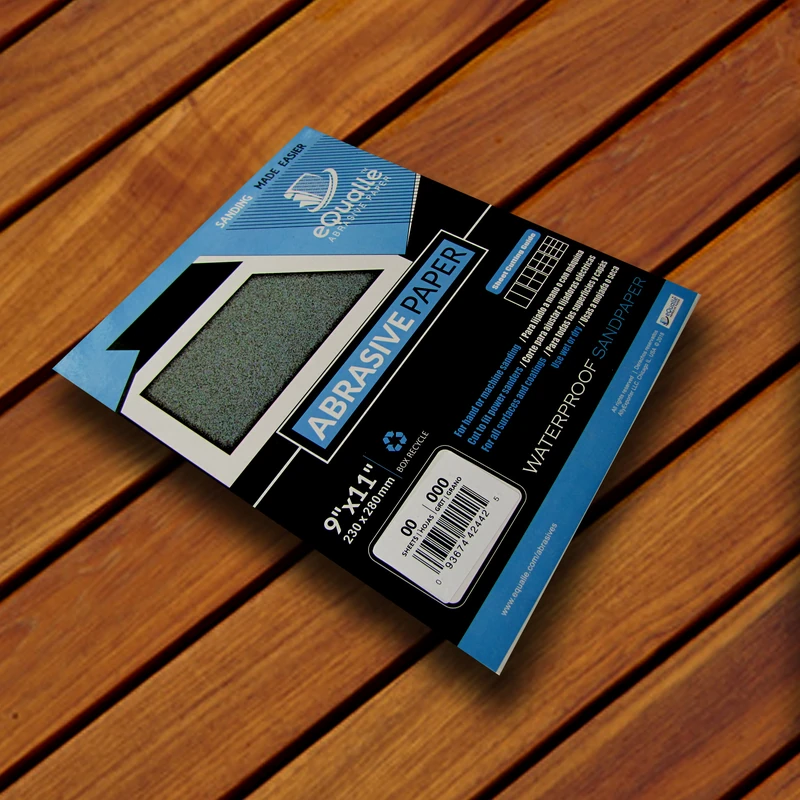
240 Grit Sandpaper Sheets (25-pack) — 9x11 in Silicon Carbide Abrasive for Wet or Dry Use — Light refinement grit that blends sanding marks and smooths primer layers. Perfect for wood, resin, or plastic before lacquer application. Produces consistent scratch patterns and controlled results when used wet or dry. (Professional Grade).
Frequently Asked Questions (FAQ)
Q: Should I sand drywall inside corners wet or dry?
A: Use a slightly damp sanding sponge for inside corners when you’re consolidating paper fuzz or blending minor ridges; follow immediately with a dry pass to prevent saturation. For heavier material removal, stay dry at 150–180 grit to avoid softening the paper. Never leave the paper damp—it can blister under primer.
Q: What grit sequence prevents fuzzy paper and ridges in corners?
A: Start at 150–180 for knockdown, then refine at 180–220. Avoid grits below 120 in corners unless you’re addressing significant ridges, and switch to a damp sponge if fuzz appears. After priming, de-nib at 220–320 using very light pressure to preserve tape integrity.
Q: How do I keep wood edges crisp without over-rounding?
A: Use a firm or medium-firm sanding sponge, begin at 120–150 for shaping, and finish at 180–220 before primer. Work with long, shallow passes that start on the field and exit over the edge. If you need extra crispness, create a hybrid face by wrapping one side with PSA film abrasive to limit compliance.
Q: When is a sponge better than a sanding block or pole sander?
A: In edges, profiles, and inside corners where pressure must taper and the tool must conform slightly. A sanding sponge distributes load across a compressible face, preventing gouges and enabling micro-chamfers. Blocks and pole sanders are superior for flat-field leveling but can undercut angles and roll edges if used in tight geometry.
Q: How do I clean and extend the life of my sanding sponge?
A: For dry sanding, knock out dust with a firm tap, then brush with a nylon bristle. For damp drywall work, rinse lightly and squeeze—don’t twist—to avoid breaking the foam’s cell structure. Rotate faces during use to even wear, and retire sponges when the foam loses rebound or the abrasive face looks polished rather than granular.