
Choosing Paper vs Film for psa sanding discs
The shop was quiet except for the steady tick of a cooling motor and a faint scent of pine dust hanging in the air. On the bench sat a half-sanded tabletop—streaks of dull and glossy revealing where the grit had cut well and where it had glazed over. Next to it, a small mountain of spent sanding discs told its own story: torn edges, clogged faces, one with a perfect ring of peeled adhesive like a sticker gone wrong. If you’ve had a moment like this—standing between the result you want and the consumables in your hand—you know the choice of sanding disc backing is more than a small detail. It’s the difference between a clean, disciplined workflow and a day spent fighting heat, dust, and frustration.
Maybe you’ve tried both kinds without thinking too hard about the backing. But once you understand how paper and film behave, selecting the right psa sanding discs gets much simpler. Paper flexes into profiles and costs less per disc; film shrugs off tears and keeps grit flat for a more uniform scratch. Backing choice shapes everything downstream—how quickly you cut, how evenly you finish, how long your pad lasts, and how much effort you spend cleaning or replacing discs mid-project.
If you sand for work or for joy, you know the feel of a good pass: a steady, controlled cut and a pad that doesn’t skate or chatter. You also know the telltales of trouble—sticky resin loading, hot spots around the edges, or that sudden zip as a disc lets go under heat. Those have causes you can see and fix. With the right backing for your material, the correct grit progression, and a few small shop habits, you can keep your process smooth and your outcomes consistent. Let’s break down how to choose—and when to reach for paper versus film—so your finish looks as intentional as your design.
Quick Summary: Choose paper-backed PSA for flexible, fine finishing on wood and curved surfaces; choose film-backed PSA for durability, uniform scratch, and wet/dry work on hard, flat, or high-wear tasks.
Paper vs. Film: The Core Choice
When you peel and stick a disc, you’re committing to a particular combination of stiffness, tear resistance, and how the abrasive face will track your surface. That begins with backing.
Paper is made in different weights (A, C, D, etc.). Lighter papers feel more cloth-like and wrap into radiuses and contours. Heavier papers add stiffness for flatter tracking but still tear more easily at the edge than film. Paper’s big strengths are sensitivity and flexibility: it conforms beautifully, it’s typically more affordable, and it helps you “read” the surface—especially on wood, where you might blend curves or follow grain transitions without digging. The trade-off is durability. Paper edges can fray if they catch, and under high heat or aggressive pressure, the sheet can crease or tear.
Film is usually a polyester (PET) base. It’s thin yet very tough, with a high tensile strength that resists tearing at the perimeter. Film’s chief advantage is consistency: because the backing is dimensionally stable, the abrasive coating levels very evenly, which translates into a more uniform scratch pattern—an asset when you’re chasing a show-quality paint or clear-coat finish. Film tolerates water for wet-sanding and stands up better to edges, hard substrates, and higher heat. The trade-off is a slightly stiffer feel that may not wrap as easily into tight contours.
Adhesion and pad health also differ. With both backings, clean application matters: a dust-free pad and steady pressure from center out keep bubbles away and prevent hot spots. Paper’s fibers can compress slightly, which may mask small pad irregularities. Film, because it transmits heat more directly, will punish a dirty pad or trapped dust with faster adhesive softening.
Shop checklist—paper or film?
- If your surface is curved, delicate, or prone to telegraphing scratches (softwoods, veneered panels), start with paper.
- If your job is flat, hard, or demands uniform sheen (automotive clear, solid surface, metal), favor film.
- If you’ll wet-sand or push higher pressure for removal, choose film.
- If you’re fine-sanding by touch with frequent disc changes, choose paper for feel and cost.
When psa sanding discs Need Paper Backing
Paper-backed discs excel where finesse and flexibility matter more than brute endurance. Woodworkers, luthiers, and furniture refinishers often prefer paper when the job asks the abrasive to “flow” with the workpiece rather than fight it. Because paper wraps gently into contours, it reduces the risk of flattening a profile or digging a flat spot into a curve. On softwoods and veneered surfaces, paper’s slightly cushioned response makes it easier to control scratch depth—especially with open-coat aluminum oxide that sheds dust and resists loading in resinous woods like pine.
Paper is also a natural fit for fine finishing. In grits from P180 to P400 and beyond, paper-backed discs leave a pleasing, even scratch that blends quickly. That can save time between coats of finish when you’re scuff-sanding or leveling in thin passes. During hand-guided sanding with a block or interface pad, the tactile feedback you get through paper is reassuring; you’ll feel high spots without the disc grabbing.
Workflows that shine with paper:
- Contoured furniture parts, moldings, and carved details
- Between-coat scuff sanding on clear finishes
- Softwood projects prone to loading (use stearated/open-coat paper)
- Quick surface prep where you’ll change discs frequently
Practical considerations help, too. Paper-backed psa sanding discs are often less expensive, making it easier to switch grits often or discard a partially loaded disc without wincing. The downside? Edge tears if you catch a sharp corner, and reduced life under heavy stock removal. Paper can also hold onto fine dust in the adhesive if you set a peeled disc on the bench and then try to reapply it—avoid that by dedicating a clean liner sheet for temporary storage.
Tips for success with paper:
- Keep pressure light and the sander flat to prevent edge fray.
- Choose open-coat, stearated papers for resinous woods and paints to minimize loading.
- Use an interface pad when following curves; it spreads pressure and protects the pad face.
- Store discs in a resealable bag to keep adhesive and abrasive clean.
Why and When to Choose Film PSA Discs
Film-backed discs are your go-to when the surface is hard, flat, and the finish standard is unforgiving. The consistent thickness of polyester film gives the abrasive a uniform platform, which reduces random deep scratches (“wild scratches”) that can telegraph through paint or clear coats. That’s why film shines in automotive, solid-surface countertops, and metal finishing—anywhere a predictable scratch pattern helps you hit an exact sheen with fewer steps.
Durability is the other reason to favor film. The edge of a disc takes the most abuse; when you meet an edge or break a corner, paper can nick and propagate a tear, while film resists that failure. Film handles higher contact pressures for stock removal in mid-grits (P80–P180) and transitions smoothly into fine-grit microfinishing (P800+), often in wet-sanding where water keeps heat down and clears swarf. If you’ve ever watched a paper disc start to curl or buckle under heat, you’ll appreciate how film stays true and keeps cutting.
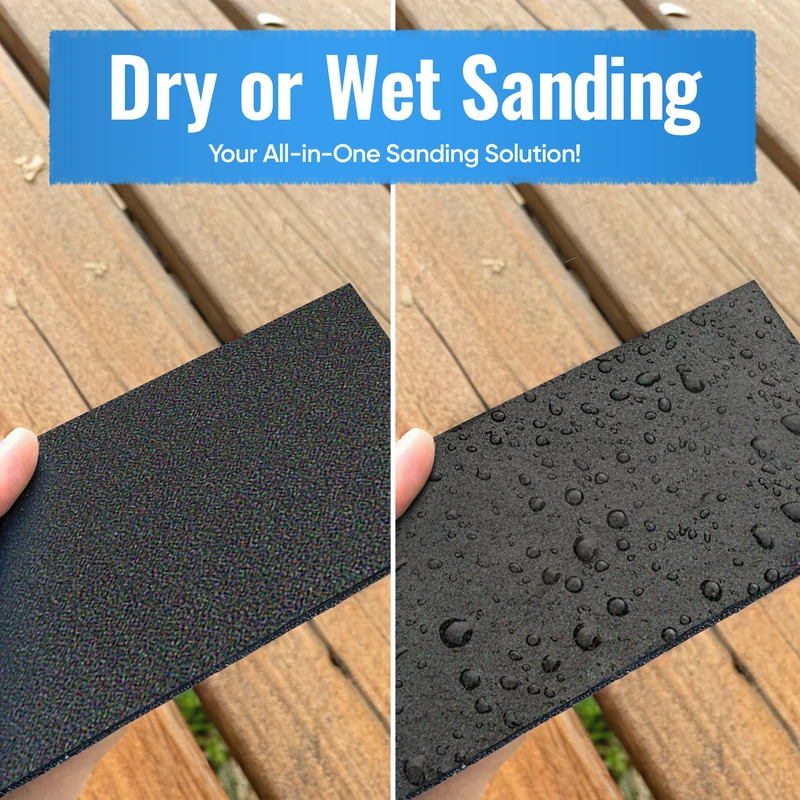
Wet/dry versatility is a bonus. A light mist or full wet-sanding with film-backed silicon carbide can be transformative on finishes and metals, keeping the cut sharp and the surface cool. In paint removal or gelcoat leveling, film’s resilience means fewer disc changes and more time with a consistent scratch.
Compatibility matters: PSA works best on clean, intact sander pads. If your pad face is worn or contaminated, the firm contact with film can concentrate heat and soften adhesive, leading to slippage. Clean the pad and press from the center outward to expel air.
According to a article.
Film-forward scenarios:
- Automotive primer, basecoat, and clear leveling (uniform scratch needed)
- Solid surface and composites where scratch mapping is critical
- Metal deburring and blending (with appropriate grit and mineral)
- Wet-sanding workflows to control heat and dust
Grits, Coatings, and Dust: Get the Finish Right
Whether you choose paper or film, the abrasive mineral, grit progression, and dust management lock in your results. A smart progression prevents deep scratches from hiding until the final coat, and the right coating keeps your disc cutting instead of glazing.
Choose mineral by material:
- Aluminum oxide on wood: tough, long-wearing, friendly to varied grain.
- Ceramic or zirconia on aggressive wood/paint removal: faster cut with pressure.
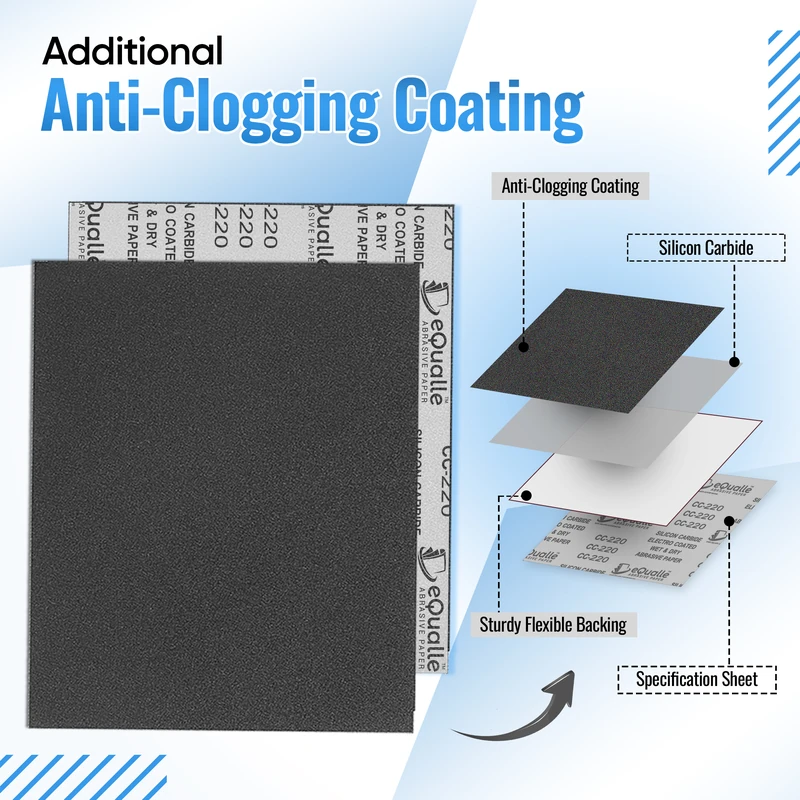
- Silicon carbide on finishes, plastics, stone, and wet-sanding: sharp, friable, great for polishing steps.
Match coat to loading risk:
- Open-coat (spaces between grains) for softwoods and paint; it sheds dust.
- Stearated (often white/gray topcoat) to resist loading in resinous materials.
- Closed-coat for metals and hard, flat surfaces where maximum contact is helpful.
Plan your grit path. A common wood sequence for shaping to finish is P80 → P120 → P180 → P220 (then P320 between coats). Automotive refinishing might run P400 → P600 → P800 → P1000 wet before polishing. Skip no more than 1.5× in grit scale to avoid chasing stubborn scratches later.
Dust control matters with PSA. Many PSA discs are solid-face; that can mean more swarf stays under the disc compared to hole-pattern H&L. Compensate with:
- Vacuum-equipped sanders and shrouds where possible.
- Light passes and frequent disc rotation (peel, turn 90°, reapply) to distribute wear.
- Wiping the surface between grits to keep loose abrasive from scarring.
Five actionable tips to improve your results today:
- Keep a “clean pad ritual”: before every new disc, palm-brush or blow off the pad; a clean pad runs cooler and grips longer.
- Mind your pressure: let the abrasive do the work; too much force overheats PSA and dulls grains.
- Heat check often: touch the pad’s edge; if it’s hot to the fingertip, pause, vacuum dust, and lighten your hand.
- Park discs on a clean liner: save the release paper and use it as a temporary parking spot between grits.
- Label your discs: a pencil “P180” on the face avoids mix-ups and prevents accidentally polishing with a coarser disc.
If you need absolute uniformity and plan to wet-sand or work hard substrates, film-backed PSA is the safer bet. For tactile control on wood and detail work, paper-backed PSA is a joy to use. And if you split your time between both, keep side-by-side stacks: paper for profiling and blending, film for flattening and final uniformity. That simple division streamlines decisions without sacrificing finish quality.
Stop Melting Your — Video Guide
A helpful explainer zooms in—literally—on why random orbit sander pads lose their grip and fling discs. Under magnification, you see how heat, dust contamination, and worn pad hooks or adhesive create failure points that start at the edge and race inward. It connects the dots between technique, temperature, and pad health.
Video source: Stop Melting Your Hooks (why sanding discs fly off your sander)
240 Grit Sandpaper Sheets (10-pack) — 9x11 in Silicon Carbide Abrasive for Wet or Dry Use — Smooth-cut abrasive for soft blending, de-nibbing, and light surface preparation before polishing or coating. (Professional Grade).
Frequently Asked Questions (FAQ)
Q: How do I decide between paper and film for the same grit?
A: Start with the job’s surface and finish standard. Curves, softwoods, and detail blending favor paper for its flexibility and tactile control. Flat, hard, or high-precision finishing (auto clear, solid surface, metals) favors film for a uniform scratch and durability. If you’ll wet-sand or push higher pressure, choose film.
Q: Are PSA discs worse for dust extraction than hook-and-loop?
A: Many PSA discs are solid-face, so they don’t pair with through-pad dust holes as often as H&L. That can trap more swarf under the disc. Counter this with active vacuum collection, lighter pressure, frequent disc changes, and wiping between grits. Some PSA options do have hole patterns—match them to your pad if available.
Q: Can I reuse a PSA disc after peeling it off?
A: Sometimes. If the adhesive and back face remain clean, you can reapply once or twice. Always park a peeled disc on its clean release liner to protect the adhesive. If dust contaminates the adhesive or the disc starts to slip under heat, retire it to avoid marring the surface or damaging the pad.
Q: Why does my PSA disc slip or fly off mid-sanding?
A: Heat and contamination are usually to blame. A dusty or worn pad face, trapped air bubbles during application, or too much pressure builds heat that softens the adhesive. Clean the pad, press from center outward to seat the disc, run moderate speed/pressure, and let hot surfaces cool between passes.
Q: What grit progression should I use for wood finishing?
A: A reliable path is P80 (shaping) → P120 (refining) → P180 (pre-finish) → P220 (final prep), then P320 between coats of finish. On resinous softwoods, use open-coat, stearated paper to reduce loading. Switch to film if you need a more uniform scratch on flat panels or if you plan to wet-sand between coats.